Strategic Timing of Registry Releases for Coordinated Multi-Registrar Acquisitions
Jordan Lang · Oct 17, 2026
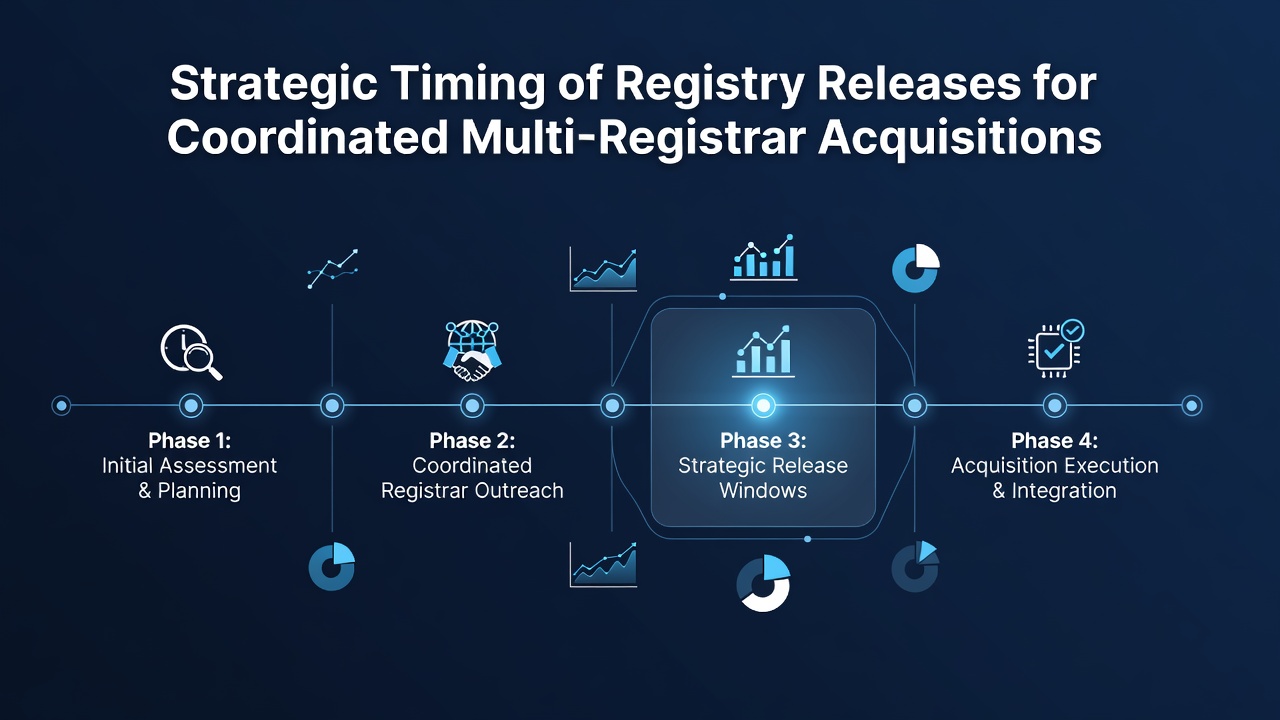
Strategic Timing of Registry Releases for Coordinated Multi-Registrar Acquisitions
Registry releases occur when domain name registries such as those managing generic top-level domains make previously reserved or deleted names available for registration according to predetermined schedules, and coordinated multi-registrar acquisitions involve multiple accredited registrars working in synchronized patterns to secure targeted names during these windows. Observers note that these releases follow technical protocols established through registry agreements, which specify exact times, often aligned with UTC, to prevent system overload and ensure equitable access. Data from ICANN reports indicate that release events typically cluster around maintenance cycles, creating predictable intervals where bulk monitoring tools track thousands of names simultaneously across registrars based in different regions.
Registry Release Mechanisms and Scheduling Patterns
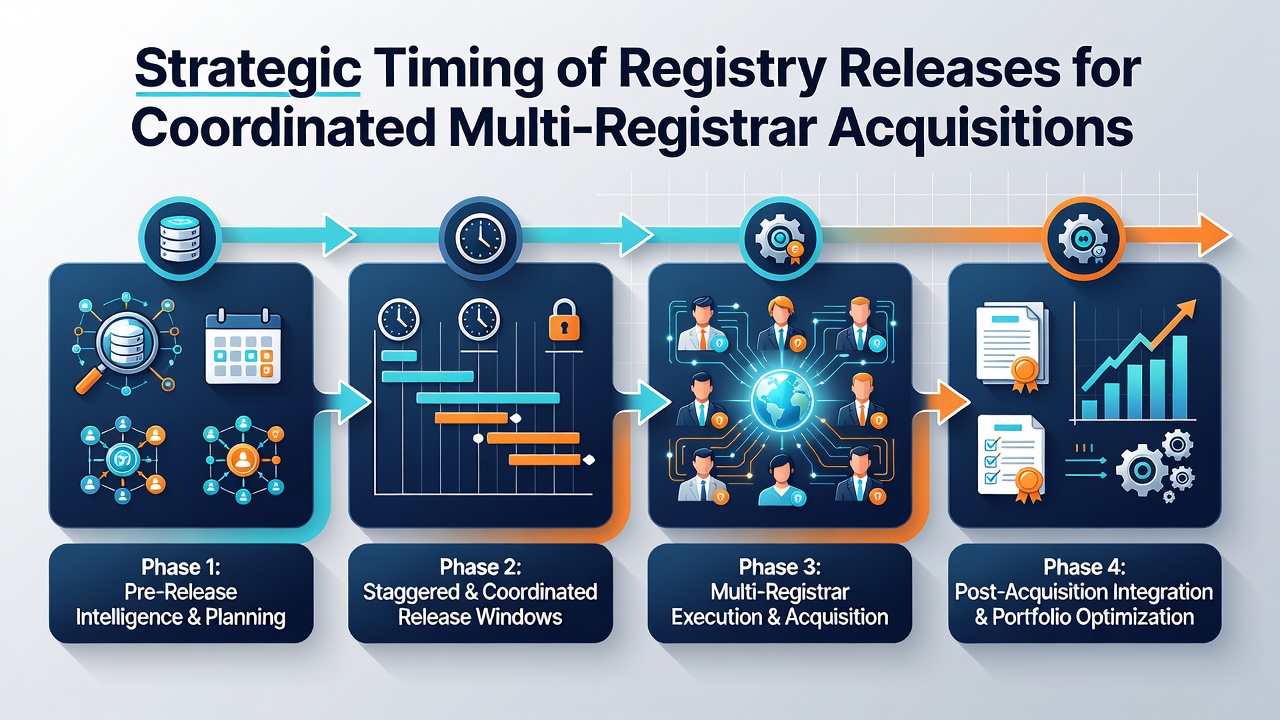
Domain registries operate under contracts that define release cadences, including daily drops for expired names, quarterly waves for premium inventory, and annual purges tied to policy reviews, while multi-registrar coordination relies on API integrations that allow simultaneous queries from distributed endpoints to capture names before single-registrar queues saturate. Research from academic studies on internet infrastructure shows that release timing correlates with global traffic peaks, leading participants to adjust for time zone offsets when deploying scripts across North American, European, and Asia-Pacific registrars. Figures from industry monitoring services reveal that October releases, including those projected for October 2026, often coincide with fiscal year-end cleanups at major registries, resulting in elevated volumes of available names in categories such as geographic and brand-related strings.
Coordination Strategies Across Registrars
Coordinated acquisitions require registrars to share real-time status data through secure channels while complying with registrar accreditation agreements that prohibit collusion yet permit parallel operations, and participants achieve synchronization by aligning bid parameters and monitoring intervals to specific release timestamps published in advance. Those who study these patterns report that success rates improve when teams distribute acquisition tasks across registrars with varying backend connections to the same registry, reducing the risk of single-point failures during high-demand drops. According to analyses published by the Canadian Internet Registration Authority, such distributed approaches have documented higher capture rates for .ca-related extensions during aligned release events compared to isolated efforts.
Data-Driven Timing Optimization
Timing decisions draw from historical release data aggregated across registrars, where metrics such as average processing latency, competition density per name category, and success probability curves guide the selection of optimal windows within each release cycle, and tools that parse registry zone files enable precise forecasting of availability. Experts have observed that releases scheduled during off-peak hours for major markets tend to exhibit lower contention, allowing coordinated groups to prioritize names with higher projected value while maintaining compliance with rate-limiting rules enforced at the registry level. Reports from the Australian domain administration body highlight seasonal variations in release volumes that influence acquisition planning for entities operating across multiple jurisdictions.
Technical and Operational Considerations
Multi-registrar setups depend on robust EPP protocol implementations and failover mechanisms that switch between registrars if one encounters throttling, while monitoring systems track registry announcements for last-minute adjustments to release schedules. Observers note that integration with WHOIS databases and zone file updates provides the granular timing intelligence necessary for these operations, and case examples from portfolio management services demonstrate how staggered submissions across registrars can circumvent per-registrar limits without violating terms of service. Data indicates that preparation for events such as the October 2026 release windows involves pre-validation of registrar accounts and testing of parallel connection pools to handle expected query volumes.
Conclusion
Strategic timing of registry releases supports coordinated acquisitions through structured scheduling, distributed registrar networks, and data-informed adjustments that align with established protocols. Information from regulatory and industry sources underscores the role of precise synchronization in navigating these processes across global registries, with ongoing developments in October 2026 expected to follow established patterns of volume and timing.