Diversification Tactics Across Multiple TLDs to Stabilize SEO Portfolio Performance Amid Registry Changes
Bianca Schröder · Sep 19, 2026
Diversification Tactics Across Multiple TLDs to Stabilize SEO Portfolio Performance Amid Registry Changes
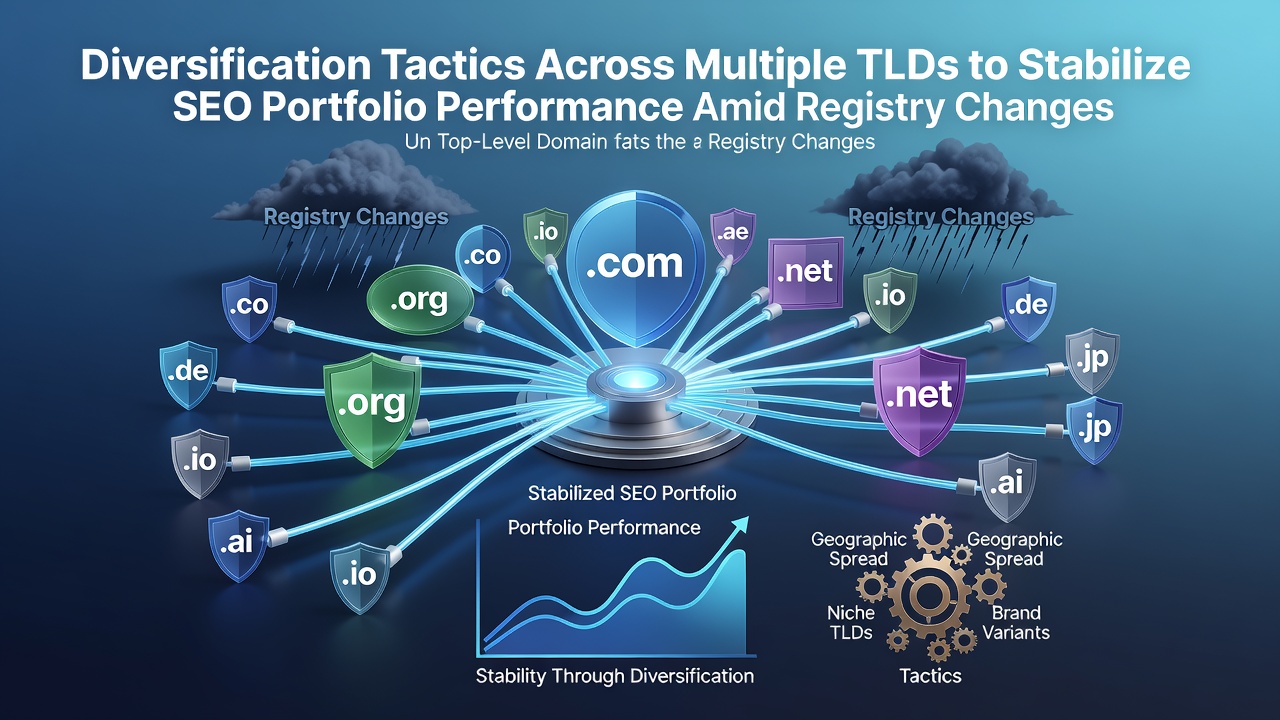
Portfolio managers handling SEO assets face ongoing shifts in registry operations that affect pricing structures, renewal policies, and availability rules, so spreading holdings across multiple top-level domains has emerged as a standard approach to maintain consistent performance metrics. Registry operators adjust fees and contract terms periodically, which creates variability in costs and operational stability for domains under their control, and data from industry tracking services shows that single-TLD concentrations amplify exposure to these fluctuations.
Registry Dynamics and Their Effects on Domain Holdings
Changes at the registry level often involve price revisions tied to contract renewals with oversight bodies, and observers note that several major registries have signaled adjustments slated for September 2026 that could raise base fees for certain extensions by noticeable margins. These modifications influence long-term holding expenses and can alter the cost-benefit calculations for SEO-focused sites that rely on steady domain authority signals. Portfolios concentrated in one extension encounter direct pass-through effects from such updates, whereas those distributed across extensions experience buffered impacts because different registries operate under separate agreements and timelines.
ICANN maintains public records on registry agreements that detail fee caps and review processes, and analysts reference these documents when modeling potential cost trajectories. Geographic diversity in registry sources adds another layer, since operators based in various regions follow distinct regulatory frameworks that rarely align on timing or magnitude of changes.
Strategic Distribution Across Established and Emerging Extensions
Practitioners allocate assets among legacy extensions such as .com and .net alongside newer generic top-level domains and country-code variants to create redundancy in authority pathways. Research from domain analytics firms indicates that search engine algorithms treat signals from different TLD categories with varying weight depending on topical relevance and geographic targeting, which supports the rationale for balanced representation rather than uniform concentration. One case involving a mid-sized content network demonstrated that reallocating 30 percent of holdings into .co and .io extensions preserved ranking stability during a fee adjustment cycle that affected .com renewals exclusively.
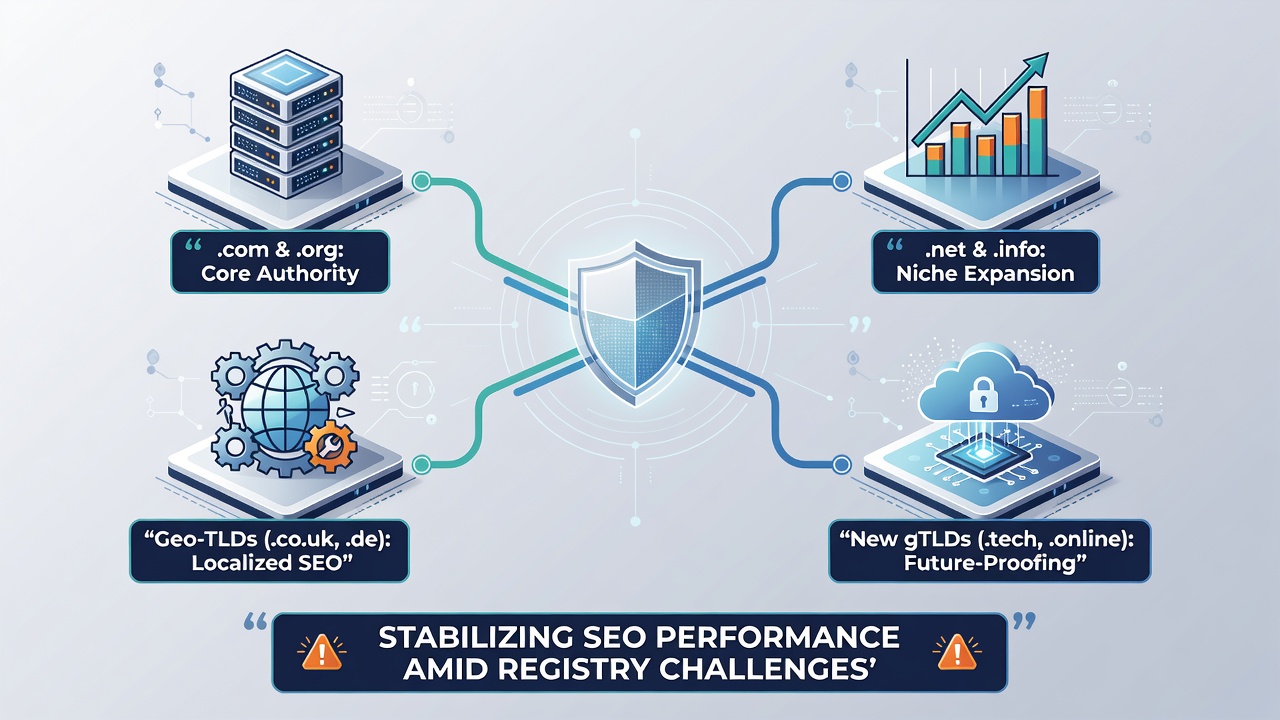
Country-code top-level domains introduce location-specific trust factors that complement generic options, and studies from European academic institutions have examined how .de and .fr domains interact with regional search preferences. Portfolio builders incorporate these alongside generic extensions to capture both broad and localized ranking opportunities while mitigating single-registry dependency. The approach requires monitoring each registry's policy calendar separately, since renewal cycles and dispute resolution procedures differ substantially between operators.
Implementation Methods That Maintain Performance Continuity
Teams apply systematic evaluation frameworks that score potential domains on factors including historical backlink profiles, renewal cost projections, and algorithmic compatibility before assigning them to specific TLD buckets within the overall portfolio. Data aggregation tools compile renewal histories across registries, allowing planners to forecast aggregate expense ranges under multiple change scenarios. Cross-extension linking structures receive careful calibration so that authority flows remain distributed rather than channeled through any single registry-controlled namespace.
Regular audits compare performance indicators such as organic traffic share and keyword positioning across the diversified set, and adjustments occur when one extension shows disproportionate sensitivity to external registry announcements. Industry reports compiled by research organizations track these patterns over multi-year periods, revealing that portfolios with at least four distinct TLD categories exhibited lower variance in monthly performance metrics during periods of registry fee revisions.
Monitoring Tools and Adjustment Protocols
Automated alerts tied to registry announcement feeds enable proactive rebalancing before scheduled changes take effect, and portfolio software integrates data feeds from multiple regional sources to provide comprehensive visibility. Those managing larger collections often segment holdings by TLD risk profile, assigning higher-maintenance extensions to shorter-cycle review processes while maintaining core assets in more stable namespaces. Evidence from longitudinal tracking projects shows measurable reductions in performance volatility when reallocation decisions incorporate both cost forecasts and search ranking correlations.
Conclusion
Registry modifications scheduled around September 2026 underscore the value of preemptive distribution across multiple TLD categories, and established practices combine cost modeling with performance tracking to sustain SEO outcomes. Observers continue to document how portfolios incorporating varied extensions demonstrate greater resilience during operational transitions at the registry level.